

Ed McCormack, the “Father of FDIC,” passes away
By LARRY DAVIS
Editor’s Note: Ed McCormack, the “Father of FDIC,” died April 11 in Massachusetts. He was 67. Below, FireRescue columnist Larry Davis shares his feelings about his friend’s passing.
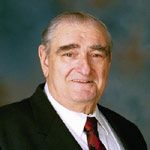 Throughout my fire-service career, I have never had difficulty expressing my thoughts, whether in front of a group or behind a keyboard. That all changed a few days ago when I found myself unsure of how to express my feelings about the passing of Ed McCormack, better known as “Big Ed,” who was my very close friend, confidant, coach, counselor and mentor. Second only to my wonderful and understanding wife, Mary Ann, Ed was my closest friend for more than 20 years.
Anyone who ever had the opportunity to work with Ed knows he lived for one purpose: the betterment of the fire service. To some people who met him but never had the opportunity to really get to know him, Ed could come across as intimidating, simply because of his size and his straightforward approach to the issue at hand. No matter what the issue, he dealt with it by facing it head on.
Like so many others, I would never have had so many opportunities to make my mark on the fire service if it hadn’t been for Ed. He trusted me enough to give me the opportunity to share my thoughts, concerns and ideas about the fire service on a national level.
I met Ed when I attended my first Fire Department Instructor’s Conference (FDIC) in Memphis in the mid-1970s. In those days, the ISFSI held a two-day conference prior to and in conjunction with FDIC. At that time, Ed was chief of the Massachusetts Fire Academy and the secretary of the International Society of Fire Service Instructors (ISFSI).
ISFSI had a number of Sections (i.e., the State Directors of Fire Training Section, the Industrial Instructors Section and the Municipal Instructors Section) intended to address the concerns of fire-service instructors who had common needs. When some members of ISFSI expressed the need for a Volunteer Instructors Section, two ISFSI board members suggested that I be appointed the Section’s interim chairman. That was close to 30 years ago. As Ed became the full-time executive director of ISFSI and I became more involved as an ISFSI board member and eventually chairman of ISFSI, our relationship grew from a professional one to a close personal friendship.
My life has been blessed because of my relationship with Ed. There have been (and still are) many people in the fire service like me who have the fire service in our blood. Why is this? I have yet to figure that out. I always envisioned the day when I would become a fire chief — the ultimate achievement. Through my relationship with Ed, I had the opportunity to meet others who shared my passion for fire-service excellence. Because of these experiences and those fire-service leaders, I quickly learned that, as a fire-service instructor, I could help develop fire chiefs and fire officers who could become agents of change as opposed to victims of change.
When ISFSI decided to get into the seminar business in the late 1970s, I told Ed about the two-day Rural Firefighting Tactics (RFT) seminar I had developed and delivered throughout Pennsylvania, and suggested ISFSI might like to try to deliver one. In less than two months, Lee Hustead (a co-instructor) and I were on our way to Colorado to deliver the seminar to more than 100 people. It was Ed’s faith in us as instructors that provided us the opportunity to do that first seminar. We ultimately delivered several hundred seminars in virtually every state in the country, as well as most of the provinces in Canada.
The success of the seminars led to the development of “Rural Firefighting Operations,” (RFO) books I, II and III. When I wrote the first RFO book, Ed and I met with several people involved in publishing fire-service texts. Those people informed me that I needed to totally rewrite the book because it would not sell as it was. Ed did not believe these “experts,” and ISFSI got into the publishing business and printed the first RFO book in 1985. That, of course, led to the second and third books. To this day, those books, while no longer in print, are still used by many rural fire departments.
Ed was the type of person who could “think around corners”; he had a keen sense of what the future held and what needed to be done today to deal with the future. The many things his efforts helped accomplish include: the NFPA Fire Service Professional Qualifications Standards, the National Fire Service Professional Qualifications System, the first “Essentials of Firefighting” text, the creation of the U.S. Fire Administration and the National Fire Academy, the creation of the Fire Department Safety Officers Association, growing FDIC from a conference of fewer than 2,000 people with no exhibits to one of many thousands with hundreds of exhibits (Ed has been called the “Father of FDIC”) and the coaching and mentoring of many people who hold leadership positions in the fire service today.
Those outside the fire service can never fully appreciate what we do and why we do it. Nor can they understand the values the fire service instills in and requires of its members. While we don’t always agree, fire-service members take care of our own and watch each other’s backs. No matter what the situation facing him, Ed never failed to exhibit those values we expect of fire-service leaders.
Whether you knew him as Chief McCormack, Mr. McCormack, “Big Ed” or just Ed, you know he never dwelt in the past but focused on tomorrow. By the same token, while I feel a deep and personal loss at his passing, I know he would not want us to mourn his passing, but rather to celebrate his life’s work by providing the best training and education to members of our fire-service family so they can safely perform their duties and return home.
Chief and dear friend Ed, I salute you and thank God for allowing our paths to cross.
Larry Davis is a full member of the Society of Fire Protection Engineers, a certified Fire-Protection Specialist and a certified Fire-Service Instructor II, with more than 30 years of experience as a fire-service instructor. He is vice president of GBW Associates, LLC, and the chairman of the Rural Firefighting Institute.