

 |
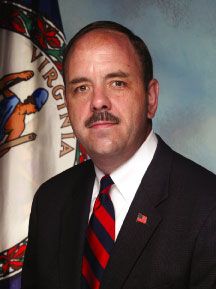
The nation’s first undersecretary for preparedness, George W. Foresman, recently spoke with IAFC’s executive director, Garry Briese, about the fire service’s role within the Department of Homeland Security and the newly created Preparedness Directorate Foresman now leads. Undersecretary Foresman, who was most recently a cabinet-level advisor to Virginia’s governor on matters of preparedness, also has a fire background. He served as a volunteer firefighter and his brother still serves with the Lexington (VA) Fire Department. Here is an edited transcript of Briese’s conversation with Foresman.
Garry Briese: With your history and your family’s history with the fire service, what kind of influence does that have in your current position?
George Foresman: You know, we live in an exceptionally complex world. When I started in the fire service in the 1980s, we hadn’t heard a lot about hazardous materials and hazmat programs. You went from being a basic firefighter to being a hazmat-aware firefighter. It seemed a long jump for a guy who didn’t do well in chemistry. … I think it taught me that we’ve got to put a premium on keeping people current. The incident command system, for example, is not a byproduct of what we do. It’s the core of what we do. To the fire service, I’d say we’ve got to be prepared to adapt to new structures and new ideas and embrace the change for all the good.
Very personally to me, I recently received two retirement notices for people I worked with in Virginia. It hammers home that we’re going through a major generational change and those who saw so many of the changes in the ‘70s and ‘80s, those who essentially created the culture of the modern fire service, are getting ready to move on. We’ve got to be able to capture their knowledge and transfer it to those who’ll be leading the fire service in the next 20 years and I’m not sure if we’re doing enough to embrace the gray-haired men and women who cut the path. They have a heck of a lot of wisdom, advised by major events, including the bombing of the Murrah building (in Oklahoma City), the first bombing at the World Trade Center, 9/11, the Midwest floods, Hurricane Andrew, all the hazmat incidents…
At the end of the day, it’s our job to make sure a firefighter, whether career or volunteer, male or female, rural or urban, comes home from a call or shift, but we cannot replace the wisdom of those who cut the ground before them.
Briese: Considering the controversy over the federal government’s response to Hurricane Katrina, what steps do you think need to be taken to improve the nation’s preparedness for natural disasters, terrorist attacks and other emergencies?
Foresman: We’ve got to put it in the appropriate context. A lot of things clearly didn’t work well at the federal level, at the local and state levels and in the private sector as well as with our citizens. What is missing in the discussion, I think, are some of the things that did work well. We had a lot of areas of the Gulf Coast that were extremely well evacuated. We had an unprecedented response in virtually every state to house evacuees.
What we need to do is quit treating preparedness as a step in the continuum of detection, prevention, response, mitigation and recovery. Preparedness needs to be the umbrella — the culture we live with on a day-to-day basis, from the government to citizens so that everyone understands they have a value-added role to play, that they have a clear understanding of what is expected and what they need to do to meet those expectations.
Briese: President Bush proposed serious cuts to both the FIRE and SAFER grant programs. Based on these programs’ success with local fire departments, how do you justify that decision?
Foresman: With the SAFER grants, that is part of the long-standing and ongoing debate in Washington on whether or not it’s the responsibility of the federal government to fund what is essentially a local activity. I’m not going to jump in the middle of that debate, but I recognize it’s going on and affects the actions we take.
We both know that there are program areas in other disciplines that the federal government has continued to fund. What I’m having to look at from my position is what we need to be doing with existing funding streams to help communities and states be successful in their safety and security efforts. Are we providing sufficient flexibility down to state and community levels? It’s part of the larger debate of: Is the federal role to provide ordinary capabilities or extraordinary capabilities at the local and state level?
We have to sit down and discuss the full range of arguments, so we’re fully informed. These decisions went through a lot of vetting and there are philosophical issues at work. But whether the dollars are state, local or federal, the one fundamental is that we must provide for the safety of our citizens, and the fire service is absolutely critical to that.
Briese: The U.S. Fire Administration was moved into the Preparedness Directorate from the Federal Emergency Management Agency. What role do you expect USFA to play in the directorate?
What should be done to ensure that the fire service remains an integral part of FEMA’s response mission?
Foresman: Well, I’ll tell you that I just had lunch with Chief Charlie Dickenson (Deputy U.S. Fire Administrator) along with Secretary Chertoff and we talked about that. I look to the Fire Administration to play an especially active role in vision-setting with where we need to go with our nation’s preparedness, the actions we have to take. They want to be engaged and involved and I want them to be engaged and involved.
There are a lot of people (within DHS) who admire and respect the fire service, but some of them don’t necessarily understand the culture and values of the fire service. That impacts how you make decisions and implement programs.
A lot of the problem solving issues I’ve dealt with over the course of six weeks could have been addressed through better communication directly with stakeholders. We have to bring in the fire service on a broad range of issues and the Fire Administration can be a very effective partner at the table in making that happen.
I’ve got to get through a really serious assessment, looking at training, the Fire Administration, the Emergency Management Institute and others.
Frankly, with all of these different entities, it’s not where they report to, but whether or not we have a common training doctrine that permeates our approach to training and allows specific needs, cultures and missions of individual disciplines to remain intact.
Briese: That’s the key.
Foresman: Right. Do we have core principals and unity? That doctrine is critical to long-term success in doing a better job to train the next generation. We have to make sure that training is relevant, effective and, most importantly, efficient.
Briese: Lastly, what more do you want to communicate to the fire service? What message do you want to make sure we hear?
Foresman: Number one, we have to put a premium on communication, and I don’t mean technology. I mean the art of communication.
When I was at the local and then the state level, I’ve seen some of the tension between disciplines, between levels of government, between the public and private sectors. Some tension can be healthy for promoting advancement, but some of that negative tension isn’t surrounding the discussion of where we need to go and what we need to do to get there, but that we haven’t been communicating effectively.
When we do take the time to communicate beyond our PDA environment of Blackberries and e-mail, we discover that we agree on about 80 percent of the issues we face. It’s in the 20 percent where we need to be concentrating our efforts and working through the really tough issues.
Secondly, preparedness is not a function of the Department of Homeland Security. It’s the culture of how all of us as individuals and organizations manage risk. We need to be disciples of preparedness before we’re disciples of a defined hazard or threat.
When people get up in the morning and check the weather forecast, they’re managing their risk. When they put in place a plan for a fire in their homes, whether it’s a smoke detector or a full plan, these things are risk management. The fire service, actually, is responsible for one of the most successful risk-reduction campaigns in the history of the United States. What I would say is that when you’re out there talking to children and families and businesses about fire safety, go that extra step. Tell them that, with one small jump, you can have a plan to deal with a full range of hazards — from fires to floods to tornados to terrorism.
The American people have reached the point that by the end of 2006, when something like $18 billion will have been spent by the federal government to enhance public health, emergency management, and fire and police protection, they’re going to ask what they got for that money. They’re going to want to know if they’re better prepared than five years ago.
We’ve got to make sure we can measure our progress. Whether you’re a volunteer company getting a couple of thousand or a metropolitan career company getting a couple million, there’s going to be greater expectation to measure performance at all levels.
And lastly, as I said, it’s a very personal issue for me that we learn from those who’ve cut the path, that we do a better job transferring their knowledge, so that we’re not having the same discussions 20 years from now that we’re having now.
I don’t want to write a report five or 10 years after Katrina that shows we didn’t learn those lessons.