

By Cristi Laquer
FireRescue1 Staff
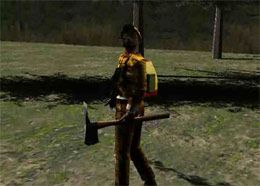 All photos ITM A computer-animated video segment in Fire in the Field. |
TALLAHASSEE, Fla. — In the case of wildland firefighting, those most in need of training are often in the worst position to access it. Many who face such fires are volunteers firefighters. They have few blocks of time to devote to training and live in rural areas without access to teachers.
Interactive Training Media, ITM, is hoping to change the way these firefighters learn with “Fire in the Field,” a computer-based training course in wildland firefighting.
ITM CEO Jim Gilpin calls it a major shift in firefighter training.
“Training for wildland firefighters has been done the same way for 30 or 40 years,” he said. “They bring people in and set them in a seat. We’ve redesigned those programs. It’s the same content, but presented in new and exciting ways.”
ITM, which also produces training software for teachers, corporations and medical professionals, created Fire in the Field just over a year ago to meet the demand they saw for more accessible wildland firefighter training.
Saving days
Traditional certification classes require each firefighter to attend five days of classes — three sitting in a classroom, followed by two days of field instruction. ITM’s software program replaces the first three days with independent home study, which is then followed by the two-day field training session as normal.
The Virginia Division of Forestry (DOF) was one of the first agencies to begin using the program to train fire departments and new employees. “Since we now need the training centers for two days instead of five, we can basically train 250 percent more people in the same amount of time,” Assistant Fire Chief Fred Turck said.
“We used to do training the traditional way. For new firefighters, that’s five days where they have to come to a training center and be away from their job and their home.”
With the Web-ROM technology behind the program, Gilpin said, “A guy with a dial-up internet connection in a small station can get the same training someone would in a big building with high-speed modems.”
Departments with three new firefighters or 50 can be trained by the same agency with minimal adjustments in staffing.
What’s inside
The program, essentially a CD ROM with Web-functions or Web-ROM, comprises about 24 hours of material that trainees can review at their own pace.
It presents videos and required readings that have been part of the traditional classroom training course designed by the National Wildfire Coordinating Group (NWCG) for years. It also includes newly-produced videos by ITM that reinforce the old lessons.
“The firefighter is a young guy or girl today,” said Gilpin. “They don’t like that old training — sitting in a classroom.”
Fire in the Field contains the same quizzes and exams as traditional courses, and students sign an agreement before beginning training stating that they will complete all required coursework.
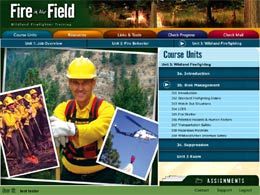 Students can browse course units, working ahead or reviewing earlier lessons. |
Trainees view the program on their own computers, but internet connectivity allows instructors to monitor their progress by logging in remotely through ITM’s web site. “That gives me, as an instructor, a good snapshot of what the students are doing,” Turck said. “Then, I can get in touch with them individually or as a group. I can say, ‘It looks like you didn’t watch that video, even though you took the exam. You need to go back and watch it.’”
In Virginia, the Department of Forestry owns a license for the program, and organizes training sessions for individual fire departments’ new members.
Turck, who has served as lead instructor for three classes of online trainees, stressed the importance of proper oversight for new students. “When we start sending people across state lines, it’s critical that they have the same training. NWCG certification provides quality control of training material.”
Student successes
The Virginia DOF, which has now conducted eight training sessions with the program, is slowly phasing out its live courses in favor of all online programming. Its annual Interagency Wildland Training Academy has provided a litmus test for the new system.
Half of last year’s class was trained in a classroom, and half were trained using Fire in the Field. “We were very pleased,” said Turck. “The test scores for the Web-ROM version were a few points higher than the classroom version.”
The latest small class of DOF employee trainees were all trained using the program and scored an average of 95 percent on the final training exam. “We know they’re absorbing the material,” says Turck.
| Editor’s note: For more information about Fire in the Field, visit ITM online at www.itm-info.com |