

By Jamie Thompson
FireRescue1 News Editor
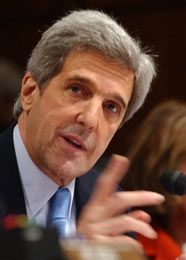 AP Photo/Dennis Cook John Kerry called for an investigation into claims against NIOSH. |
WASHINGTON — NIOSH should try to speed up investigations into firefighter fatalities, according to a federal inspector general.
Daniel Levinson said memories of those at the scene may not be as fresh and the fire site itself may be destroyed by the time investigators currently arrive.
Levinson, from the Department of Health and Human Services, made the comments in a letter to Sen. John Kerry, who demanded a probe into NIOSH earlier this year.
In February, MSNBC.com reported that a safety expert’s warning on the reliability of firefighters’ PASS devices went unheeded for five years by the CDC, which oversees NIOSH.
Sen. Kerry called for the CDC’s handling of the case to be looked at in the wake of the claims.
Levinson ruled there is no evidence that management within the CDC willfully prevented investigators from examining PASS devices as part of NIOSH’s firefighter fatality investigations.
But he added there are several “critical” areas of the fatality investigation team that could be enhanced, including funding and authority.
In the letter to Sen. Kerry, he said:
- The Fire Fighter Fatality Investigation and Prevention Program (FFFIP) operates under a general appropriation with limited resources and lacks specific directions regarding how the program must be administered. As such, there are no standards to hold the organization accountable for how the funds are used or with which to measure the success of the program.
- NIOSH should explore possible ways to initiate investigations closer to the date of the actual fatality. By delaying the investigation, memories of those at the scene may not be as fresh or complete, and in some investigations, the fire site itself has been altered or destroyed by the time NIOSH investigators arrive.
- Limitations in NIOSH’s authority may inhibit the success of the FFFIPP. For example, the individuals that NIOSH interviews as part of its investigations are not required to respond to NIOSH’s questions. As a consequence, NIOSH strives to maintain an atmosphere of collegiality in conducting investigations, including having a policy of not identifying individuals and manufacturers in its investigations, to obtain and/or maintain cooperation.
Sen. Kerry said he hoped to work on helping to improve oversight of the CDC’s investigative process and to secure more funding.
“The IG found a lack of resources, and it’s obvious that Congress needs to provide more funding to investigate firefighter deaths and clearly define what it expects from the CDC,” he said.
Levinson’s letter to Sen. Kerry coincided with the release this week of a report into NIOSH and the fatality investigation program by the IAFC’s Health and Survival Section.
Its recommendations, to be worked with other fire service organizations, NIOSH or both, are:
- Develop a working group to augment the information provided in the NIOSH reports. There have been concerns that current reports does not go far enough and needs to include significantly enhanced command and control as well as tactical recommendations.
- Identify the need for statutory changes, additional resources (staffing and funding), and enhanced capabilities to facilitate the mission of the FFFIPP.
- Develop a plan to integrate fire service subject matter experts into the NIOSH-FFFIPP investigative process, in both administrative and on-site response roles.
- Formulate written criteria to identify incidents that require or merit the more in-depth investigations discussed above.
- Provide a method for these investigations to be conducted and funding for the effort. This may be through an expansion of the USFA significant incident program or through some other effort.
- Develop a program to collect, analyze, and disseminate information regarding personal protective clothing and equipment problems and failures.
- Promote rapid development of enhanced capabilities with the NIOSH National Personal Protective Technology Laboratory to conduct technical evaluation and testing of personal protective clothing and equipment involved firefighter fatalities and other incidents where performance deficiencies or failures are suspected.
In response to the recommendations from the IAFC and Levinson, NIOSH said on its website that it “looks forward to continuing to enhance the FFIPP with the input of these recommendations.”
It added that it has always valued stakeholder advice and input to improve its work.