

In modern buildings, trusses provide many dangerous defects
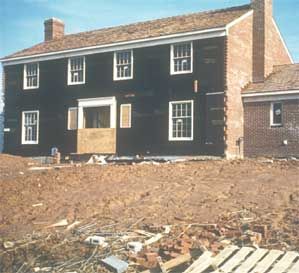
For firefighters, even modern codes don’t guarantee building safety. The modern and expensive “brick” house pictured here is actually a wooden house with a brick veneer exterior (see “Building Construction for the Fire Service, Third Edition,” p. 122). The house has wood truss floors, subject to early collapse, which will cause the entire brick veneer wall to collapse. I have never heard such a building correctly described in a report or a pre-plan.
In addition, the garage of this house is made of composite brick and block masonry, with steel trusses inserted between certain courses to bind the walls together. This eliminates the header bricks (bricks laid across the wall with the ends showing) used in earlier days, making it increasingly difficult to differentiate a bearing wall from a veneer wall (see “Building Construction for the Fire Service, Third Edition,” p. 147).
Some multi-story buildings also pose danger, despite being built to modern codes. You may be told not to worry because the building is sprinklered. However, residential sprinkler systems are designed to prevent flashover and to contain a contents fire until the occupants can escape; they do not cover truss voids. I have documented many incidents where fires in sprinklered buildings started or developed in voids not covered by the sprinklers, causing significant damage (see “Building Construction for the Fire Service, Third Edition,” p. 580). Note: Although NFPA sprinkler standard 13D permits modified sprinklers in residences up to four stories only, it’s possible for the authority having jurisdiction to grant an exception for a taller building. In any case, supply the sprinklers immediately; in a lawsuit, failure to do so may be accepted as the cause of the loss, rather than the fact that fire developed in unsprinklered areas. I have also seen large, old wooden houses converted to bed-and-breakfasts, with residential sprinklers installed. The interconnected voids common in such houses are not sprinklered.
Trusses are also a problem in commercial buildings.1 Lieutenant Robert Hauryluck of Ladder 128, New York City Fire Department (FDNY), recently conducted a pictorial company drill on a commercial building in the company’s response area.2 He decided to study the building after noting it had a lattice bowstring truss roof that wasn’t visible from the street. He further noted that the owner had adopted the common practice of placing stock on the bottom chord of the trusses. This undesigned load will speed collapse.
When fire later broke out at this building, the ladder company officer relayed the information from the drill to the incident commander (IC), who subsequently ordered a defensive attack. The roof collapsed, but no firefighters were hurt. Note: A roof collapse can bring down the walls. Establish and enforce an adequate collapse zone, using police assistance if necessary.
 |
Francis (Frank) L. Brannigan, a fireground commander in the 1940s and a fellow of the Society of Fire Protection Engineers, was named one of the 20 most influential people in the fire service by Fire Chief Magazine. For 37 years, Brannigan has defined building hazards for firefighters. His book, “Building Construction for the Fire Service, Third Edition,” is available from the NFPA.
ENDNOTES
- In 1920, Compton’s Building Encyclopedia recommended lattice trusses as a lightweight alternative to the heavy timber trusses commonly used in churches or public halls at that time. For larger buildings, steel trusses came into vogue about the same time. A steel truss collapse in the attic of a theatre in Brocton, Mass., killed 13 firefighters. Emphasis at the time was not placed on the truss, but rather on the snow load on the roof.
- This information was abstracted from “WNYF: With New York Firefighters, 3rd issue/2005,” an official training publication of the FDNY. Subscriptions are available by calling 212/698-4524. I recommend the training division of every fire department obtain a subscription.