

Don’t fight fire from narrow alleys
Fire can easily extend from one of these buildings to the other across the alleyway. Avoid the dangerous tendency of overaggressive firefighters to get into the alleyway for “a better shot at the fire.” The potential for collapse is too great, and there’s no escape path. Write SOPs ordering no operations in alleys. Notify mutual-aid units of this policy to avoid confusion on the fireground.
Plan to use heavy streams from outside the collapse zone from both ends of the alleyway. If the buildings contain window sprinklers, know how to turn them on. From the interior of a sprinklered building, use hooks to pull the fusible links or break the bulbs in sprinklers near the windows to open the sprinkler heads and prevent contents from igniting. (This is not “water damage"; it’s prewetting to prevent ignition.) Connect to the building’s fire department connection and make sure the sprinklers receive the maximum design pressure. High pressure and volume greatly increase sprinkler efficiency.
One reviewer of my book, Building Construction for the Fire Service, Third Edition, commented that the recommendations I made about staying out of alleyways were “elemental.” However, that same year three firefighters died in alleyways where buildings collapsed.
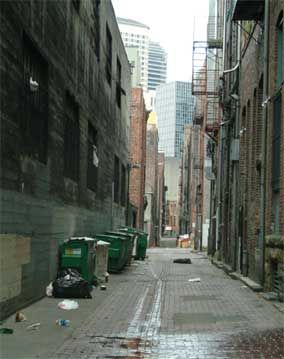 PHOTO KEN KERR/SHOOT SOURCE |
Francis (Frank) L. Brannigan, a fireground commander in the 1940s and a fellow of the Society of Fire Protection Engineers, was named one of the 20 most influential people in the fire service by Fire Chief Magazine. For 37 years, Brannigan has defined building hazards for firefighters. His book, “Building Construction for the Fire Service, Third Edition,” is available from the NFPA.