

Artificial Intelligence
The FireRescue1 Artificial Intelligence topic features content related to the use of artificial intelligence in emergency services and the new technology’s impact on firefighters and EMS providers.

Future tech tools require increased resiliency and reliability

Over 1,000 first responders weigh in on the future of their tech tools

Whether you need data-driven outreach or just better graphics, AI offers practical ways to strengthen your prevention messages

Seattle officials are considering tracking ambulance wait times after concerns over an out-of-state nurse line and AI-assisted triage of 911 medical calls

The strongest retention strategy is giving firefighters reasons to keep choosing your department

Task-based training standards can help departments define what personnel need to know and do to use AI responsibly
CPSE CENTER FOR INNOVATION AI PROVEN PRACTICES
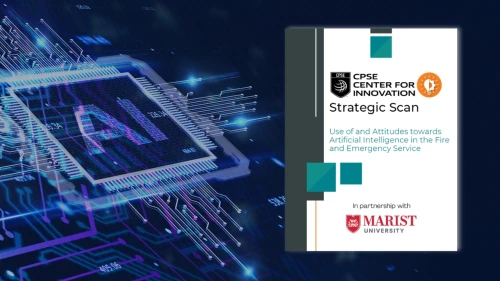
CPSE Center for Innovation researchers Alex Henderson and Alex Fisher break down how departments are using AI, where adoption is lagging and what concerns remain

Chiefs Brad Brown and Don Lombardi discuss important considerations for agencies using AI — and how it will never replace an incident commander’s “gut feeling”

From scheduling to training manuals, VBFD firefighters are using AI to cut through admin workload and keep people focused on higher-value work
ADDITIONAL AI-FOCUSED NEWS & RESOURCES

Part 2: Research suggests AI is accelerating work, weakening reflection and creating new demands on the people it promised to help

How will the future of fire and EMS be impacted by federal government change, force multiplier technology and a new frontier for trauma patient care

How the future of firefighting will be impacted by artificial intelligence, electrification and 5G communications on fire and EMS

Training firefighters to use AI effectively requires more than prompt-writing skills

Dan Chuparkoff challenges fire service leaders to use AI to reduce routine work while keeping judgment, accountability and decision-making human

West Virginia University researchers are testing a system that would allow satellites to detect wildfires and reposition themselves to provide crews with more frequent data on fire behavior

AI-powered mapping is helping track buildings, defensible space and evacuation routes across 31 million acres to improve wildfire preparedness and response

ImageTrend announced a leadership transition as the company accelerates AI-powered product development and expands its software platform for EMS, fire, healthcare and public safety agencies

Connectivity has never been better; the challenge now is filtering the noise, establishing priorities and making better decisions under pressure

Seattle’s fire department used artificial intelligence for more than two years to analyze medical 911 calls raising questions about transparency, privacy and oversight

Applying the NIST AI Risk Management Framework can help departments evaluate, deploy and govern emerging AI tools

NERIS lead developer Craig Weinschenk addresses questions and misconceptions surrounding the system — and how the team is working to improve it every day

Leading AI adoption doesn’t require you to be a technologist — it requires you to be a leader

How responsible AI guidance applies to training, decision-making and trust in the fire service

Utilities and fire agencies are deploying AI-powered smoke-detection cameras to spot wildfires earlier in remote, high-risk areas, giving crews a head start before flames spread

The department is using AI to evaluate both narrative and structured ePCR data

AI tools are reshaping how fire departments document meetings, forcing new decisions on consent, data control and records management

Commissioner Lillian Bonsignore on recognizing EMS as an essential service with the funding and career pathways to match

The San Bernardino County (Calif.) FPD fire chief says it’s time to step up to fix what’s broken in the fire service — and that means embracing technology and innovation

New writing tools can help organize data, sharpen narratives and align applications with funder priorities when paired with human review

A tactical playbook for firefighters, company officers and chief officers

How AI will reshape the future of fire‑EMS operations, dispatch and governance, according to the ChatGPT

The Colorado department developed a flexible, town-wide policy to manage risk, protect sensitive information and guide responsible use

From drones and AI to virtual reality, emerging innovations promise to reshape operations, enhance safety and strengthen decision-making across the fire service

From shift schedules to PFAS gear, these are the stories that lit up our socials

Inside the department’s plan to use AI to improve planning, documentation and daily operations

AI, cognitive friction and the future of fire service leadership

The division chief details when and how to use AI tools

Leading-edge programs will be featured in FireRescue1’s Innovation Museum, part of CPSE’s Center for Innovation

A look at what first responders need now – and what they need next

How this tech augments the human element of fire safety

Understanding the impact of AI sycophancy
MOST POPULAR

- When the machine thinks for us
- Calif. FD receives first wildfire notification from AI-detection camera
- Chief Dan Munsey: Leaders must have a bold vision — and a plan
- On-demand webinar: AI 101 to 201 — leveling up practical skills
- Turning data into decisions: How Henderson Fire is scaling QA/QI with AI