


FEATURED INCIDENT COMMAND COVERAGE

Learn now to prepare firefighters at every level to step up and lead when it counts


Detailing how the first-arriving unit should take command, perform an initial size-up, and communicate with dispatch and other responding units

When resources run short during disasters, disciplined command becomes the key to prioritizing needs and coordinating aid

Explore the most-popular resources of the year, from tactical guidance and command insights to station planning and wellness support

Survey results reveal why many fireground tools struggle to gain traction — and what it takes for technology to become part of standard operations

It’s essential to establish clear rules, expectations and training for all command functions

Breaking down the role of division officers in reducing command overload and supporting tactical execution on complex incidents

We must create an environment that preserves the incident commander’s cognitive bandwidth
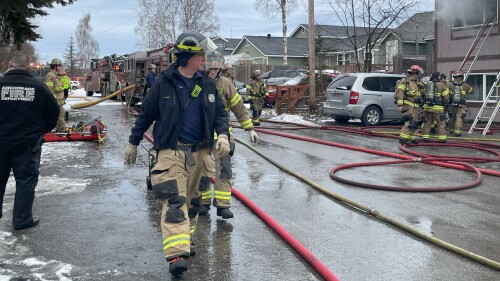
Effective incident command requires decisiveness, adaptability and a commitment to both operational outcomes and personnel well-being

Is your department ready to launch a natural disaster response amid reduced staffing and backup systems?

The chain of command and issuance of orders can become complicated if all parties involved do not respect the system and its boundaries

A logistics team is essential for streamlining larger, more complex operations

Detailing USAR team capabilities and how deployment takes shape

INCIDENT COMMAND NEWS AND TRAINING RESOURCES
Roof operations are dangerous, but these steps can help reduce that risk
After years of development and testing, the ECB is in pilot testing
Although much has changed in firefighting in the past 20 years, we still approach interior attack with the same mindset, and that may be about to change too
More than 300 firefighters from 102 departments battled the blaze for nearly 24 hours
The fire has burned for more than 17 hours
Use these 9 questions and 14 steps to prepare your fire department for incidents that turn violent
COMMAND POST MANAGEMENT FOR NEW OFFICERS
In this four-part video series, Chief Marc Bashoor provides an overview of command post management for new officers.

Bringing calm to chaos: Command post management for new officers, Part 1
6:20

It’s all about location: Command post management, Part 2
6:02

Running the scene: Command post management, Part 3
9:16

Learning to relax: Command post management, Part 4
10:29
ABOUT THE SPONSOR: PULSARA
Pulsara ONE, FREE Out-of-Hospital Communications between EMS and the ED
Pulsara’s easy-to-adopt communication platform connects EMS to the hospital with a tap, leaving behind archaic technologies that slow critical care coordination. Our platform seamlessly coordinates communication between the field (EMTs and paramedics) and between hospital staff (RNs, MDs, Techs, etc.) to improve the treatment times and outcomes for critical care patients. Pulsara’s feature-rich mobile platform uses video chat, audio clips, instant messages, images, data, and benchmarks to help teams treat their patients faster.
Pulsara’s easy-to-adopt communication platform connects EMS to the hospital with a tap, leaving behind archaic technologies that slow critical care coordination. Our platform seamlessly coordinates communication between the field (EMTs and paramedics) and between hospital staff (RNs, MDs, Techs, etc.) to improve the treatment times and outcomes for critical care patients. Pulsara’s feature-rich mobile platform uses video chat, audio clips, instant messages, images, data, and benchmarks to help teams treat their patients faster.

Building muscle memory eases stress during critical emergencies

Departments can play a large role in supporting the health and safety of underserved residents

This platform helps ensure consistent and reliable communication when it matters most

Colorado Springs Fire Department has significantly improved patient outcomes thanks to Pulsara
